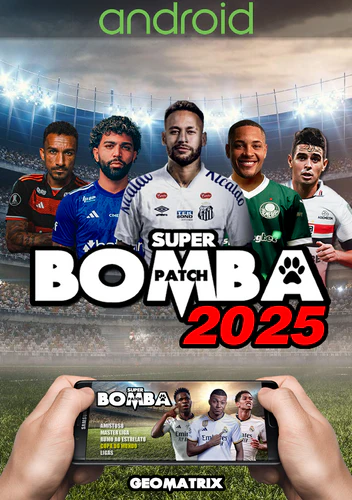
Free Download Bomba Patch 2026! Get the latest version with updated Brazilian teams, players, tournaments & competitions. Experience the ultimate soccer game mod with authentic South American atmosphere
The year 2050 marks the era of the "Deep Experience," a complete departure from the passive consumption of the early 21st century. Media has evolved from something we watch or listen to into something we inhabit. Driven by breakthroughs in neural linking, hyper-realistic simulations, and decentralized creation, extra quality entertainment in 2050 is defined by total immersion and radical personalization. The Living Narrative: From Scripted to Generative
The future of entertainment will also be characterized by personalized content. With the help of artificial intelligence (AI) and machine learning algorithms, entertainment platforms will be able to offer tailored content recommendations based on individual preferences, viewing habits, and interests. This will not only enhance the user experience but also provide new opportunities for creators to produce content that resonates with specific audiences.
By 2050, entertainment will become increasingly immersive, with the help of technologies like Virtual Reality (VR), Augmented Reality (AR), and Extended Reality (XR). These innovations will enable consumers to step into their favorite stories, interact with virtual characters, and experience events in a more engaging and realistic way.
The leap from 4K screens to holographic displays has transformed the home into a stage. Holographic Influencers
Xxx Sex 2050 Extra Quality [updated] Cracked -
The year 2050 marks the era of the "Deep Experience," a complete departure from the passive consumption of the early 21st century. Media has evolved from something we watch or listen to into something we inhabit. Driven by breakthroughs in neural linking, hyper-realistic simulations, and decentralized creation, extra quality entertainment in 2050 is defined by total immersion and radical personalization. The Living Narrative: From Scripted to Generative
The future of entertainment will also be characterized by personalized content. With the help of artificial intelligence (AI) and machine learning algorithms, entertainment platforms will be able to offer tailored content recommendations based on individual preferences, viewing habits, and interests. This will not only enhance the user experience but also provide new opportunities for creators to produce content that resonates with specific audiences.
By 2050, entertainment will become increasingly immersive, with the help of technologies like Virtual Reality (VR), Augmented Reality (AR), and Extended Reality (XR). These innovations will enable consumers to step into their favorite stories, interact with virtual characters, and experience events in a more engaging and realistic way.
The leap from 4K screens to holographic displays has transformed the home into a stage. Holographic Influencers